Quick-Start Guide
When you enter an equation into the calculator, the calculator will begin by expanding (simplifying) the problem. Then it will attempt to solve the equation by using one or more of the following: addition, subtraction, division, taking the square root of each side, factoring, and completing the square.
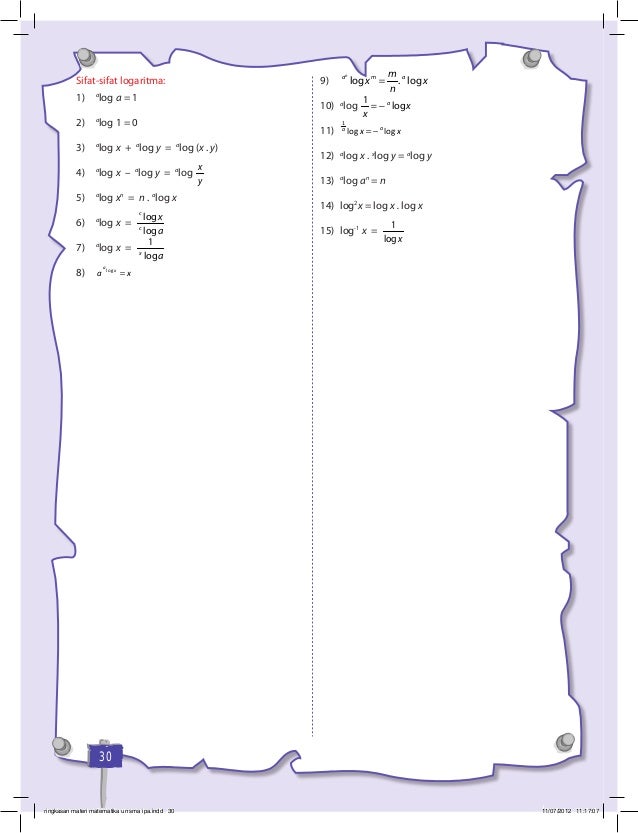
Apr 14, 2013 If it is log for both denominator and numerator then write log(1+ax) -log(1+x^2) use u.v rule in both and integrate u get after applying limits is.
- Stack Exchange network consists of 175 Q&A communities including Stack Overflow, the largest, most trusted online community for developers to learn, share.
- Algebra - Logarithm Solvers, Trainers and Word Problems - SOLUTION: log(2x)-log(x-3)=1 Log On Algebra: Logarithm Section. Solvers Solvers. Lessons Lessons.
- We need to reject any solution that makes an argument to any logarithm zero or negative. Always use the original equation to check. Checking x = -2: which simplifies to: As we can see, both of the logarithms have negative arguments. So we must reject this solution. (If even one argument was zero or negative we would still reject this solution.).

Variables
Any lowercase letter may be used as a variable.
Exponents
Exponents are supported on variables using the ^ (caret) symbol. For example, to express x2, enter x^2. Note: exponents must be positive integers, no negatives, decimals, or variables. Exponents may not currently be placed on numbers, brackets, or parentheses.
Parentheses and Brackets
Parentheses ( ) and brackets [ ] may be used to group terms as in a standard equation or expression. Organic loops funk soul keys youtube.
Multiplication, Addition, and Subtraction
For addition and subtraction, use the standard + and - symbols respectively. For multiplication, use the * symbol. A * symbol is not necessary when multiplying a number by a variable. For instance: 2 * x can also be entered as 2x. Similarly, 2 * (x + 5) can also be entered as 2(x + 5); 2x * (5) can be entered as 2x(5). The * is also optional when multiplying with parentheses, example: (x + 1)(x - 1).
Order of Operations
The calculator follows the standard order of operations taught by most algebra books - Parentheses, Exponents, Multiplication and Division, Addition and Subtraction. The only exception is that division is not currently supported; attempts to use the / symbol will result in an error.
Division, Square Root, Radicals, Fractions
X Log10x Derivative
The above features are not supported.
X Log10x 100x
Tutoring
Looking for someone to help you with algebra? At Wyzant, connect with algebra tutors and math tutors nearby. Prefer to meet online? Find online algebra tutors or online math tutors in a couple of clicks.
X Log10 2 X 1 Log10 6 Log10 5
X Log 1.0.1 1
|